
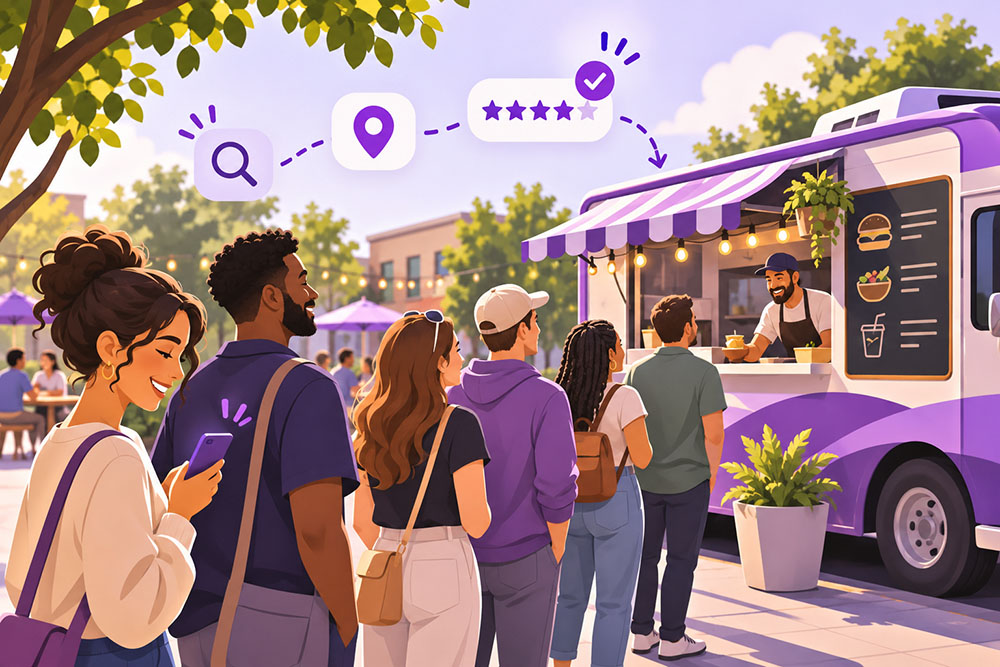
A food truck can have an active Instagram account, strong customer interest and a steady stream of food photos without having a website. That does not automatically mean its digital marketing is broken. In fact, social media may be the reason people know the truck exists.
The harder question comes after someone sees the food: Can they find the truck, check what is available, place an order or ask about catering without hunting through several accounts and apps?
For an established mobile food business, that gap matters more than whether it has the latest website design. The right approach connects social content with reliable information and clear customer actions, without replacing what already works.
If Social Media Is Working, Why Consider a Website?
Social platforms are useful for showing new dishes, announcing pop-ups, sharing behind-the-scenes work and reminding customers about upcoming stops. A food truck should not give up that attention just to move everything onto a website.
But social feeds are organized around posts, not necessarily around the questions a customer needs answered right now. A person searching for a menu may encounter yesterday’s special. Someone planning an office event may find plenty of videos but no clear way to request catering.
A website becomes useful when it acts as a dependable destination for those decisions. It does not need to replace the truck’s social channels or an ordering provider. Its job is to make the next step easy to find.
Arkutha’s food truck digital marketing overview organizes these needs around current locations, menu information and event inquiries rather than treating every food business alike.
What I Found Reviewing a Social-First Food Truck
I recently reviewed the digital presence of a Bay Area food truck with an established food concept and active social channels. The immediate problem was not a lack of visibility. The customer journey was spread across multiple destinations.
A customer might discover the food on social, then need separate sources for the complete menu, ordering, location and catering inquiries.
I developed a mobile-first website concept with a photo-led menu, current truck information, links to the existing ordering options, a catering inquiry and the business story. I also recommended reviewing public listings and how customer actions would be measured.
This was a proposed concept, not a completed website launch or a documented increase in sales. The experience reinforced a lesson from other website and conversion projects: attracting attention and helping someone take action are different jobs.
What Does a Food Truck Website Actually Need?
The best starting point is not a long list of features. It is the set of customer decisions that the business already handles. For most trucks, five elements deserve consideration.
1. A Menu People Can Actually Find
Show current core items, straightforward descriptions and useful food photography. If pricing, availability or limited specials change frequently, identify which system owns those updates. Do not create a second menu that becomes outdated while an ordering platform stays current.
2. A Reliable Find-the-Truck Page
Give customers one stable URL they can return to. It can show regular stops, the next confirmed appearance, dates, service times and directions where appropriate. Social can still announce same-day changes, but those updates should not leave conflicting information elsewhere.
3. A Clear Ordering Route
If the truck already uses a delivery or pickup provider, link to the right destination. The site does not need a custom checkout simply because it is new. Explain whether an option is pickup, delivery or on-site ordering, and confirm where each option is actually available.
4. A Separate Catering and Event Inquiry
A person buying lunch has different questions from someone coordinating food for 80 employees. Give event organizers a clear route to share the proposed date, city, guest count and event type. Describe which services are available without implying an inquiry is a confirmed booking.
5. A Credible Business Story and Real Photos
Original food photography and content can explain the business and help event planners understand what it offers without filling the site with stock imagery.
How Should a Moving Food Truck Handle Local Search?
A mobile business presents a particular problem: the brand may stay the same while its serving location changes. Customers can find an old event listing, an outdated menu or a location that is no longer current.
First, agree on the official business name, contact details, ordering destinations and source for the current schedule. Review the public profiles that customers actually use, including search, maps, social and ordering platforms. Correct stale information instead of adding more listings without an update process.
Google’s Business Profile guidelines set requirements for representing a business accurately. Profile eligibility and location display should be checked against the truck’s real operating model rather than assuming a moving truck should be listed like a permanent storefront.
Google also provides menu management options for eligible food businesses. Availability and the appropriate update method can depend on the business’s setup. What matters to customers is that the information they see agrees with what they can actually order.
For a business serving several regular markets, a local search review can determine whether the website, listings and location information need to be better coordinated. There is no need to manufacture city pages for stops the truck does not regularly serve.
Catering Is a Different Conversion Than a Lunch Order
Catering deserves more than a small note buried below the menu when it is an actual growth priority. Event planners need to understand whether the truck can serve their event, which locations it covers and what information is needed for a quote.
A short, well-designed inquiry can capture the date, location, estimated attendance and best contact information. Staff can then qualify the request and discuss the scope. If the business does not offer catering or private events, do not build this feature just because other food trucks have one.
The larger point is to separate visiting the truck from booking the business. Those are different buying decisions and should not be measured as if they were the same.
What Should You Measure Beyond Likes and Views?
Social engagement shows that a post caught attention. It does not tell the owner how many people found the truck or booked a catering event. A simple website and link strategy can provide clearer directional information, even if final orders take place on outside platforms.
Depending on the systems involved, useful actions may include taps on directions, clicks to an ordering provider, menu engagement, phone calls and completed event inquiry forms. An order-link click is not the same as a completed purchase. A catering form is not an accepted event.
Before adding elaborate reports, agree on the actions that matter and make sure they can be tracked responsibly. The analytics and conversion-tracking work should reflect the business’s actual ordering and booking process.
Build in Phases Instead of Starting With Everything
The most practical approach is often a small first release, followed by maintenance and selective improvements. A food business may need the following sequence:
- Launch the essentials. Establish accurate menu and contact information, one current-location destination, working ordering links and a catering route if needed.
- Clean up the surrounding presence. Check public listings, review destinations, profiles and update responsibilities. Make sure customers see consistent details.
- Add what earns its place. Consider email or SMS updates, event-specific pages, new photography or paid promotion only when there is a business reason and someone to maintain them.
An email list can become useful for regular customers who want notices about upcoming stops or special menu releases. It should be an optional signup with clear permission and a practical plan for sending updates, not another system the owner forgets to use.
What Can the Owner Handle, and When Does Outside Help Make Sense?
The owner or staff should control the facts: the menu, prices, schedule, availability, event capacity and ordering policies. Those details change with operations, and no marketing provider should publish them without a reliable approval process.
Outside help becomes useful when the problem crosses several systems. A truck may need its site, public listings, ordering links, forms and reporting to work together. Building a simple page is one task; defining how the business keeps everything accurate is another.
Not every successful food truck needs an expensive website. But an operator with regular locations, online ordering and catering opportunities should know whether its current digital presence makes those activities easy or unnecessarily difficult.
A Better Question Than “Do We Need a Website?”
Ask whether customers can complete the next useful action after discovering the food. If social media already brings attention, protect that strength. Then find the gaps between discovery and the information or contact option the customer needs.
Arkutha helps food and hospitality businesses review those gaps and plan practical website, local visibility and inquiry improvements. If your truck has active social channels but scattered menus, location information or catering requests, build a food-truck project brief and describe what is not working. Start with the business problem; the scope can follow.
Frequently Asked Questions
Should the website replace Instagram or online ordering?
Usually not. Social is valuable for discovery and timely updates. Existing ordering tools can continue handling transactions. The website can organize accurate information and connect customers to the right destinations.
Do food trucks need separate pages for every city they visit?
No. Start with a clear, maintainable schedule for actual locations and events. Create more specific location content only when it serves a recurring customer need and adds information beyond a city name.