
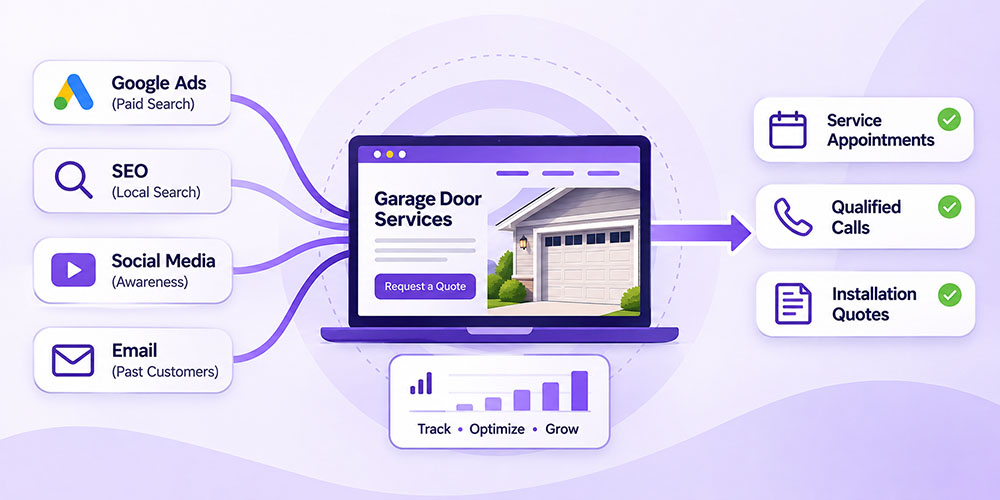
A garage door company can spend more on digital marketing and still receive the wrong kind of inquiries. Google Ads gets clicks and the website gets visitors, but the requests may be for services the team does not offer, locations it cannot serve, or customers who never reach the right person.
Before increasing the advertising budget, follow the customer’s path from search to a useful service request. For an established garage door company, that means checking the services being promoted, landing pages, service territory and what happens after someone calls or submits a form.
The goal is not simply more leads. It is more qualified requests for jobs the business wants and can handle.
Which Garage Door Jobs Do You Actually Want More Of?
Start with the company’s capacity and service mix. Garage door repair, opener service, full replacement, new installation and commercial door work may all be legitimate offerings, but they do not always attract the same buyer or follow the same sales process.
An urgent repair caller may want to know whether a technician can assess the problem soon. A homeowner replacing an aging door may need product options and an estimate. A property manager asking about several commercial doors may need a different conversation entirely.
Before changing campaigns, decide which types of work deserve more attention, what locations are practical to serve, and which requests your team should decline. The Arkutha garage-door industry page outlines how those differences affect website, advertising and tracking decisions.
Do Your Service Pages Match Those Customer Decisions?
A broad “garage door services” page is not always enough. If every ad and search result sends visitors to the same generic page, customers must do extra work to confirm that the company handles their situation. Some will leave before reaching the contact options.
Separate meaningful services without creating thin pages
A repair page should explain the repair categories the company supports, the area covered and how a service request is handled. Replacement or installation content should help someone understand the available offering and the next step toward an estimate. Commercial work should be described only when the company actually performs it.
These do not automatically need to be separate pages for every keyword or city. Build a dedicated page when the customer question, service scope or action is genuinely different. Then connect it through navigation and relevant internal links.
A focused website or landing-page improvement can be a better investment than another broad advertising push when the existing pages do not explain the services clearly.
Are Your Ads Attracting Searches That Fit the Business?
Start with the actual searches behind the clicks, not the headline impressions and click-through rate. Google Ads provides a search terms report that helps advertisers review the searches associated with their ads. It can reveal whether the account reaches people seeking the company’s actual services. A Google Ads and paid-media review can then separate search-targeting issues from website and tracking problems.
For example, a garage door installer focused on full replacements may not want to spend heavily on searches for loose parts, do-it-yourself instructions or employment. On the other hand, an opener-related search could be highly relevant to a company that services openers. The business model determines which terms belong.
Review the queries, location settings and the destination pages together. Use exclusions carefully: negative keywords can help reduce irrelevant traffic, but overly broad exclusions can also block useful searches.
If the account mixes repairs, installations and commercial work, the ad message may become too general. Separate the audiences and offers enough to understand where the money goes, without fragmenting a modest budget into too many campaigns.
What I found when restructuring an older Google Ads account
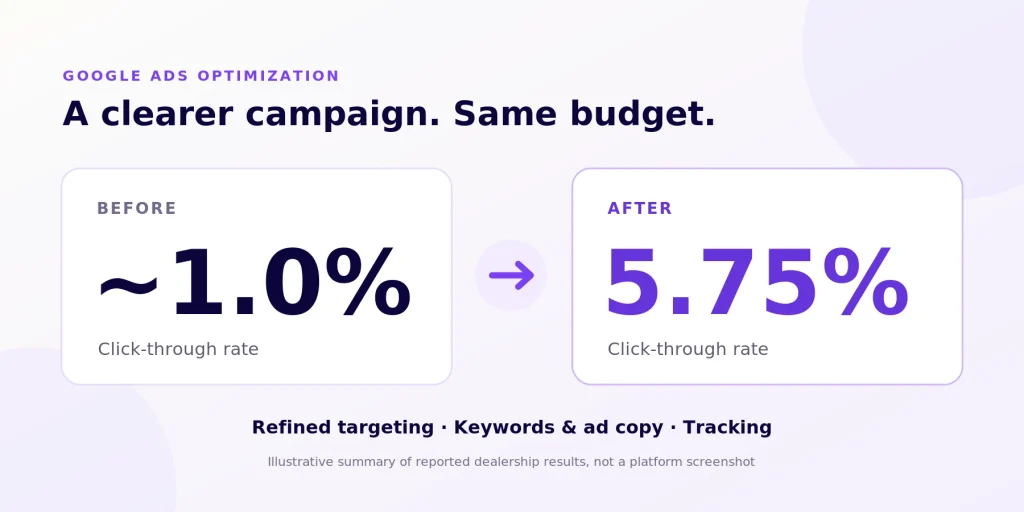
When I reviewed Google Ads for a dealership in Tracy, California, the account had not received meaningful attention for years. Its targeting was broad, the average click-through rate was around 1%, and there was little evidence that the existing activity was producing useful conversions. Rather than add budget, I reorganized keywords and negative keywords, revised ad copy and tightened location targeting. I also reworked Google Analytics measurement and compared the updated setup with the previous results so I could spot reporting discrepancies.
Average ad click-through rate increased to 5.75% without a budget increase. Contact and call activity appeared to rise, but the back-end sales process was not fully connected to the reporting. I can describe the improvement in ad engagement; I cannot turn it into a verified increase in closed sales. That distinction matters when evaluating any service-business campaign.
Does the Landing Page Deliver What the Ad Promised?
Suppose an ad offers garage door replacement estimates. If it takes visitors to a homepage that emphasizes repairs, the customer has to search again for the information they expected. The same problem occurs when a commercial service ad points to a residential page.
A useful landing page should identify the service, explain where it is available, show relevant proof when the business can provide it, and offer an appropriate next step. For urgent service, that might be a clearly labeled phone contact. For a planned project, a request for an estimate may make more sense.
Review these pages on a phone as well as a desktop. Check that photos, service descriptions, contact details and forms work without making the visitor hunt for them. Avoid same-day or 24-hour claims unless the company can consistently deliver them.
What a generator advertising project is teaching me now
In my current work on a generator company’s website and advertising, campaign click-through rates have generally been around 7.5% to 9%. That is useful feedback on ad engagement, but conversion rates are not where I want them to be. Some service pages still seem too broad for the searches bringing people in. Refining the pages by service intent is one area I want to test.
The existing tracking shows website actions, but it does not fully show what happened after someone contacted the company. Better call tracking and more complete lead feedback would help distinguish interest from real service opportunities. I have not worked directly on a garage door company’s campaigns; I’m applying lessons from related local-service work, not claiming a garage-door result.
Are You Losing Inquiries After Someone Tries to Contact You?
Marketing cannot fix a handoff that fails. An inquiry may never reach the dispatch team because a form notification goes to an inactive inbox. A phone button may be difficult to use, or a request may arrive without enough information for an effective follow-up.
Test the full path rather than stopping at a confirmation message:
- Tap the phone number from a mobile device and confirm it reaches the correct destination.
- Submit the actual estimate or service form and check that staff receive it.
- Confirm the customer sees a clear acknowledgment and knows what happens next.
- Check whether the team can identify the requested service and location.
- Review how inquiries are handled outside normal business hours when applicable.
The answers may point to a form repair, clearer copy or an operational change rather than another marketing expense. A company that wants more requests should first be confident it can receive and respond to them.
Do Your Reports Count Leads or Just Activity?
A phone-number click does not prove a call connected or that the caller needed garage door service. A form submission needs to reach the right person and describe a legitimate request before it can become a useful lead.
Google distinguishes between mobile phone-number clicks and measured phone calls. A tracking setup can record multiple action types, but owners still need a consistent definition of a qualified inquiry.
That definition may consider service requested, location, customer type and whether the request became an estimate or booked appointment. Connecting advertising reports with dispatch or sales feedback helps reveal when an apparently successful campaign brings little useful work.
An analytics and conversion-tracking review can identify missing events, unreliable phone measurement and gaps between the website and the people receiving leads.
Is Your Service-Area Information Accurate Everywhere?
Garage door companies often work across several cities, but not every job justifies the same travel time. The website and campaigns should explain real coverage rather than suggest the team serves every surrounding market equally.
Google recommends complete, accurate business information for local discovery. Check the Google Business Profile, main service pages and contact information for conflicting hours, phone numbers or service-area claims.
Local pages can help when they provide useful information about a legitimate market. However, copying the same page and swapping city names does little for customers. Prioritize the places the business actually serves and add local details only when they are real and relevant.
What Should You Fix First?
You do not need to rebuild everything at once. Start with the issue closest to a lost qualified inquiry, then decide whether additional spending is justified.
- Define the priority job types and service territory with the people doing the work.
- Review search terms, ads and landing pages for mismatched intent.
- Test the website’s phone and form paths from a customer’s device.
- Compare reported conversions with the requests your team actually received.
- Correct the biggest problem, then evaluate whether increased advertising would support the business.
The dealership and generator projects show why I separate ad engagement from business outcomes. A higher click-through rate may mean the ad is more relevant, but it cannot establish whether the company received profitable jobs. For garage door companies, the same questions apply to repair, installation and commercial requests.
An internal team can usually confirm services, territory, capacity and what happened to incoming requests. Professional help becomes useful when campaign structure, website changes and tracking need to be reviewed together.
When Is a Digital Marketing Review Worth Paying For?
A focused review is worth considering when an established garage door company is already spending on digital advertising but cannot explain which searches produce suitable requests or where inquiries are being lost.
Arkutha can evaluate advertising, website pages and measurement together, then identify which problems to fix first. If your business is paying for traffic without enough qualified inquiries, tell us what you want to improve through our project brief. Select your industry and the services you need so we can discuss a focused project rather than assume you need more ad spend.
Frequently Asked Questions
Should repair and installation use separate landing pages?
Often, yes, when customers need different information or next steps. The decision should follow the company’s real services, traffic and budget rather than a rule that every keyword needs its own page.
Is a phone click a lead?
It shows interest in contacting the business, but it does not confirm a completed or qualified call. Compare click tracking with call and dispatch records when available.
How do we know whether an agency is improving lead quality?
Agree on what qualifies as a good request. Review search terms, landing pages, real calls and forms, and feedback from the staff who handle those inquiries. Better-looking platform reports alone are not enough.