
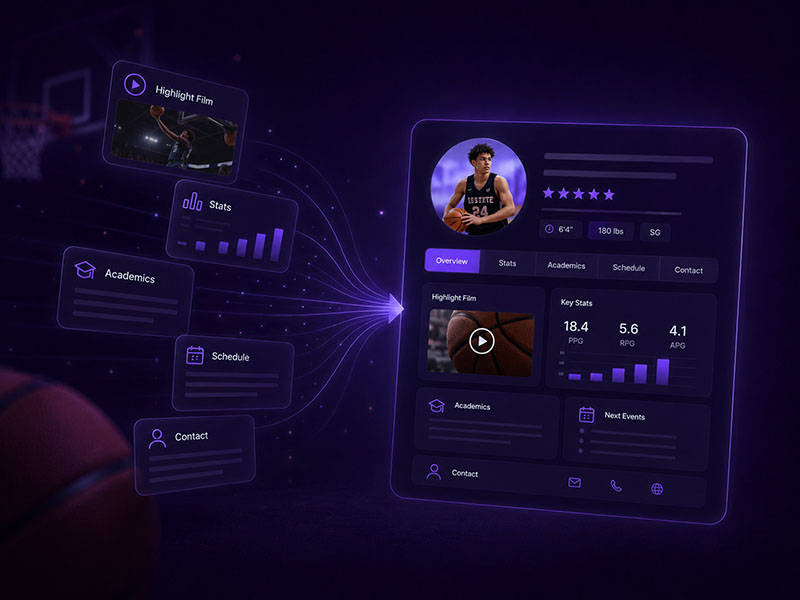
If your athlete is serious about getting more organized for recruiting, one of the best things you can do is make it easier for coaches to evaluate them.
That sounds obvious, but a lot of families accidentally make the process harder than it needs to be.
A coach gets an email with a Hudl link, then another message with an Instagram profile, then a separate text with height and GPA, and later a screenshot of a tournament schedule. Somewhere in the mix there may be a MaxPreps page, a YouTube playlist, or a few photos. None of it is necessarily wrong – it is just scattered.
When information is spread across multiple places, the athlete can look less organized than they really are. Coaches are busy. They want the clearest version of the player as quickly as possible.
That is where a student-athlete recruiting profile helps.
A recruiting profile gives your athlete one clean link that brings the most important information together in one place. It does not replace hard work, film, performance, or relationships – but it does help the athlete present themselves in a more professional, coach-friendly way.
What is a student-athlete recruiting profile?
A student-athlete recruiting profile is a simple online page built around the information coaches actually need.
Instead of forcing a college coach to dig through multiple apps and links, the profile gives them one place to review:
- player name and class year
- height, position, school, and club team
- film or highlight links
- basic stats
- academic information
- contact information
- schedule or upcoming events
- photos and social links
For some athletes, a basic recruiting card is enough. For others, a more complete recruiting profile makes sense, especially if they are actively emailing coaches, attending showcases, or preparing for a bigger recruiting push.
Why coaches prefer one clean link
Coaches do not need more clutter. They need clarity.
A clean recruiting profile helps because it reduces friction. The faster a coach can understand who the athlete is, what they look like on film, where they play, and how to follow up, the better.
A strong recruiting profile can help with:
- coach outreach emails
- social media bio links
- QR code handouts at events
- text follow-ups after tournaments
- parent outreach support
- keeping player information organized during the season
It is not magic. It will not guarantee offers or responses. But it does help the athlete look more prepared, more serious, and easier to evaluate.
What coaches actually want to see
Families sometimes overcomplicate recruiting pages. The goal is not to impress a coach with flashy design. The goal is to make the athlete easy to review.
Here is what matters most:
Student-Athlete Recruiting Profile Checklist
Open each section and make sure your athlete has the important pieces ready before reaching out to coaches.
Player Basics
- Full name
- Graduation year
- Height and position
- School and club/team
- City and state
- Jersey number, if useful
Film
- Main highlight video
- Full game film, if available
- YouTube, Hudl, or other film links
- Clear labels so coaches know what they are clicking
Stats & Strengths
- Key stats that support the athlete’s story
- Position-specific strengths
- Awards, honors, or varsity experience
- Short style-of-play summary
Academics
- GPA, if the family wants it listed
- NCAA ID, if applicable
- Test scores, if useful
- Academic interests or intended major, if relevant
Schedule
- Upcoming tournaments
- Showcases or camps
- Dates and locations
- Team name and jersey number
- Streaming links, if available
Contact & Links
- Parent or guardian contact
- Athlete email, if appropriate
- High school or club coach contact
- Social media links
- One clean recruiting profile link
What parents should avoid
A recruiting profile can help – but only if the information is clean and useful.
Here are a few common mistakes:
Sending too many disconnected links
If the athlete has Hudl, YouTube, Instagram, MaxPreps, tournament links, and coach references, that is fine. The issue is when none of it is organized.
Overloading the page
More is not always better. If every section is packed with text, charts, and graphics, the profile can become harder to scan.
Using outdated information
Old teams, outdated schedules, stale contact info, and broken links make the athlete look neglected.
Making the page all style and no substance
A nice-looking page matters, but function matters more. Coaches care about clarity, film, and information they can use.
What makes a recruiting card different from a full recruiting profile?
A starter recruiting card is built for simplicity.
It is usually best for families who want an affordable, professional starting point with the core essentials:
- one-page profile
- player basics
- main photo
- film link
- contact info
- QR code
- shareable recruiting link
A full recruiting profile goes deeper.
It can include:
- player bio
- style of play or strengths section
- academic section
- stats section
- schedule section
- coach references
- more photos
- stronger layout for ongoing recruiting use
The right option depends on the athlete’s stage, goals, and how active the recruiting process is.
What to include before you launch
If you are building a profile, gather these items first:
- athlete full name
- class year
- height and position
- school and team info
- best current photo
- film links
- contact email and phone number
- social media links
- academic details, if included
- schedule or event details, if included
The better the inputs, the stronger the final profile.
Final thought: make it easier for coaches to say yes to looking
A recruiting profile will not create talent. It will not replace film, competition, relationships, or development.
What it does do is make the athlete easier to review.
That matters.
If a coach can quickly understand who the player is, see film, review the basics, and know how to follow up, the athlete is already in a better position than someone sending scattered links and partial information.
For families who want a clean starting point, a recruiting card can be a smart first step. For athletes who need more, a full profile can grow with them.
Either way, the goal is simple: one clean recruiting link that helps the athlete look organized, credible, and ready to be evaluated.
Need help building a recruiting profile?
Arkutha LLC builds student-athlete recruiting cards and full recruiting profiles designed to help families organize film, player info, academics, contact details, schedules, and recruiting assets into one clean link.
If you want a professional recruiting profile your athlete can actually use in emails, social media, showcases, and outreach, start here.
Give your athlete one clean recruiting link.
Arkutha builds student-athlete recruiting cards and profile pages that organize film, player info, academics, stats, schedules, photos, contact details, and QR codes into one coach-friendly link.
- Built for coach emails, social bios, tournaments, and showcases
- Includes a shareable profile link and QR code
- Starter recruiting card begins at $250 setup + $25/month hosting and light updates